Chest pain is one of the most common reasons people visit an emergency department, and for good reason. Pain in this region may originate from various sources, including the heart and lungs, but also from ribs, cartilage, muscles, and nerves packed tightly together in the same compact space. Many patients are surprised to learn that a lung condition can produce pain that feels identical to a rib or chest wall injury.
This article explains how and why that happens, when to seek urgent help, and what to do if your pain persists after the lung problem has been treated.
Key Takeaways
- Sharp or aching chest pain is not always cardiac. Lung conditions such as pneumonia, pulmonary embolism, pneumothorax, pleurisy, lung cancer, chronic obstructive pulmonary disease, and asthma frequently cause pain that mimics a rib or chest wall injury.
- Sudden severe chest pain with shortness of breath, coughing up blood, or collapse is a medical emergency. Call 999 immediately rather than waiting for a GP or private appointment.
- Lung problems can irritate the pleura and chest wall, meaning significant chest wall or rib pain may continue even when basic lung tests are reassuring.
- Most causes of chest pain are not a heart attack, but any new, severe, or unexplained chest pain must be assessed promptly with appropriate imaging, blood tests, and expert review.
How Lung Conditions Can Present as Rib or Chest Wall Pain
Your lungs, pleura, ribs, intercostal muscles, and nerves all occupy the same tight space inside your chest. When the brain receives a pain signal from this region, it often struggles to pinpoint the exact source, labelling the discomfort simply as “chest pain.” This is why inflammation or infection in the lungs or pleura can feel as though it comes from the ribs, breastbone, or chest muscles, particularly when you breathe deeply or cough.
The key structure linking lung disease to chest wall pain is the pleura, a two-layer membrane surrounding each lung. The inner, or visceral, layer has very few pain-sensitive nerve fibres, while the outer, or parietal, layer lining the ribs and chest wall is supplied by intercostal and phrenic nerves. When infection, a blood clot, or tumour irritates the parietal pleura, those nerves can produce sharp pain that may be difficult to distinguish from a rib fracture or muscle strain.
Lung-related chest discomfort may stem from inflammation or irritation of the pleura, or from blockages in blood vessels supplying the lungs. After an acute lung problem settles, some patients are left with chronic chest wall pain from rib stress fractures, cartilage inflammation, or intercostal nerve irritation caused by weeks of violent coughing or pleural inflammation. Even once the lungs have healed, these secondary injuries can persist for months.
Serious heart causes such as a heart attack or unstable angina can also mimic lung or rib pain, so safe practice is always to rule out life-threatening heart and blood vessel conditions first.
When Chest Pain Is an Emergency: Heart vs Lung Red Flags
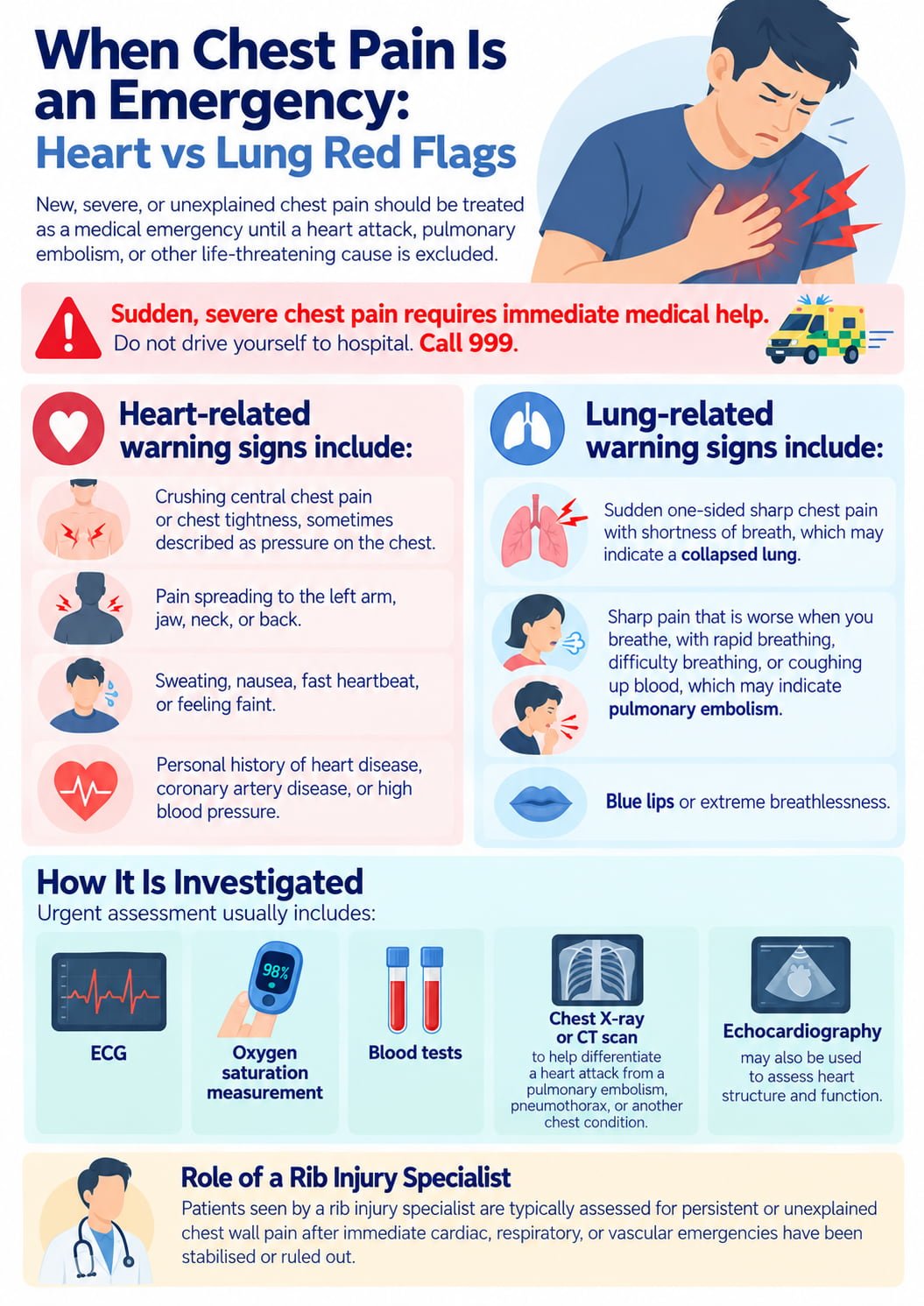
New, severe, or unexplained chest pain should be treated as a medical emergency until a heart attack, pulmonary embolism, or other life-threatening cause is excluded. Sudden, severe chest pain requires immediate medical help. Do not drive yourself to the hospital. Call 999.
Heart-related warning signs include:
- Crushing central chest pain or chest tightness, sometimes described as pressure on the chest;
- Pain spreading to the left arm, jaw, neck, or back;
- Sweating, nausea, fast heartbeat, or feeling faint;
- Personal history of heart disease, coronary artery disease, or high blood pressure.
Lung-related warning signs include:
- Sudden one-sided sharp chest pain with shortness of breath, which may indicate a collapsed lung;
- Sharp pain that is worse when you breathe, with rapid breathing, difficulty breathing, or coughing up blood, which may indicate pulmonary embolism;
- Blue lips or extreme breathlessness.
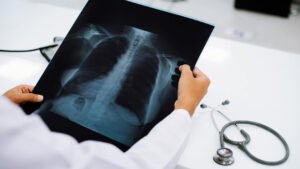
Urgent assessment usually includes an ECG, oxygen saturation measurement, blood tests, and a chest X-ray or CT scan to help differentiate a heart attack from a pulmonary embolism, pneumothorax, or another chest condition. Echocardiography may also be used to assess heart structure and function.
Patients seen by a rib injury specialist are typically assessed for persistent or unexplained chest wall pain after immediate cardiac, respiratory, or vascular emergencies have been stabilised or ruled out.
Common Lung Conditions That Cause Chest Pain
Several specific lung and pleural disorders are well-recognised causes of chest pain. Chest pain from lung conditions often requires treatment of the underlying cause, so understanding the accompanying symptoms is important.
Asthma and Chest Tightness
Asthma is a chronic airway inflammation condition that often causes chest tightness across both sides of the chest, wheeze, and breathlessness, especially at night or with triggers such as cold air, pollen, or exercise. Asthma can lead to chest tightness and discomfort that patients sometimes mistake for a heart or rib problem.
Repeated bouts of forceful coughing during poorly controlled asthma can strain the chest wall and rib muscles, leading to localised soreness that mimics a rib injury. Asthma flare-ups can also cause chest pressure, breathing difficulties, reduced exercise tolerance, and frequent reliever inhaler use.
Chronic Obstructive Pulmonary Disease (COPD)
COPD, which includes chronic bronchitis and emphysema, causes chronic cough, mucus production, and progressive breathlessness, mainly in smokers or ex-smokers over 40. The condition itself usually produces a sensation of chest tightness or “air hunger” rather than sharp pain, but continuous coughing and overinflated lungs can stress the chest wall, leading to rib and muscle discomfort.
Flare-ups caused by infection can produce acute chest pain. Any sudden change in pain pattern or breathlessness in COPD warrants urgent medical review to exclude pneumonia, pneumothorax, pulmonary embolism, or another complication.
Pneumonia and Other Chest Infections
Pneumonia is an infection of the lung tissue that commonly causes sharp, one-sided chest pain that worsens with deep breaths or coughing. Pneumonia can cause chest pain with coughing, often accompanied by fever, chills, coloured or bloody phlegm, and fatigue.
Antibiotics may be prescribed when pneumonia is caused by a bacterial infection, while viral causes generally require treatment appropriate to the underlying infection and severity. Viral infections such as COVID-19 and influenza can also trigger prolonged chest wall sensitivity from violent coughing or post-viral inflammation.
Severe coughing can occasionally contribute to rib fractures or chest wall strain, particularly in people with reduced bone strength. Rib or chest wall pain may therefore continue even after the original infection has improved.
Pleurisy and Pleural Effusion
Pleurisy is inflammation of the pleural membranes, frequently caused by viral infections. It results in chest pain when breathing deeply, coughing, or moving, and pain may radiate to the shoulder or back. Pleurisy can occur after a viral infection or pneumonia and is one of several pleural disorders that affect the chest.
Pleural effusion is a build-up of excess fluid in the pleural space, causing heaviness, breathlessness, and reduced chest expansion. Fluid drainage may be needed if pleural effusion compresses the lung.
Common causes of pleurisy and pleural effusion include bacterial or viral infections, autoimmune diseases, pulmonary embolism, lung cancer, and heart failure. Other pleural disorders can present with similar symptoms.
Pulmonary Embolism
A pulmonary embolism is a blood clot blocking one of the lung arteries, causing sudden chest pain and shortness of breath. The sharp chest pain typically worsens with breathing, and chest pain accompanied by shortness of breath requires urgent medical attention.
Risk factors include recent surgery, hospital admission, long-haul flights, immobility, pregnancy, hormone therapy, and a personal or family history of blood clots. Pulmonary embolism reduces blood flow through the affected blood vessel in the lungs and can be life-threatening if untreated.
Anticoagulants are commonly used to treat pulmonary embolism by preventing further clot formation. Some patients report ongoing pleuritic or chest wall pain after treatment, but recurrent or worsening symptoms still require medical reassessment.
Pneumothorax (Collapsed Lung)
A pneumothorax, or collapsed lung, occurs when air leaks into the space between the lung and chest wall, causing sudden chest pain on one side and breathlessness. The pain is often sharp and may follow a cough, physical strain, or rib injury. A collapsed lung requires prompt medical attention.
Small spontaneous pneumothoraces can occur in tall, thin young adults without obvious underlying lung disease, whereas traumatic pneumothorax is often linked to rib fractures, sports injuries, or road traffic accidents. Emergency management may include observation, needle aspiration, or a chest drain.
Even after the lung re-expands, some patients continue to experience localised chest wall pain from injured ribs, muscles, pleural irritation, or nerves.
Lung Cancer and Chronic Chest Pain
Early lung cancer may cause few symptoms, but as it progresses it can produce persistent chest pain, a new or changing cough, weight loss, fatigue, coughing up blood, and shoulder or back pain. Lung cancer may cause chest pain when a tumour extends into surrounding structures.
Tumours near the chest wall can directly invade ribs, vertebrae, or nerves, leading to constant or night-time pain that feels like musculoskeletal chest wall pain. Chest wall invasion occurs in a minority of primary lung cancers, and chest pain is a common presenting symptom when this occurs.
Anyone with persistent unexplained chest pain combined with symptoms such as chronic cough, haemoptysis, unexplained weight loss, or worsening breathlessness should seek prompt medical assessment. Pain that is progressive, severe at night, or unresponsive to usual pain relief also warrants investigation.
How Lung-Related Chest Pain Feels Compared With Heart and Chest Wall Pain
Only proper tests can provide an accurate diagnosis, but certain patterns can help guide clinical thinking.
| Feature | Lung/Pleural Pain | Heart Pain | Chest Wall/Rib Pain |
| Character | Sharp, stabbing | Squeezing, pressure, heavy | Aching, tender, sharp on movement |
| Trigger | Breathing deeply, cough, sneeze | Exertion, stress | Pressing the spot, twisting, lifting |
| Location | Often one-sided | Central or left chest | Localised to a rib or area |
| Associated symptoms | Cough, fever, breathing difficulties | Nausea, sweating, pain to jaw or left arm | Local tenderness or movement-related pain |
| Worsened by | Breathing in | Physical effort | Palpation, specific movements |
Overlap exists. Costochondritis can mimic cardiac chest pain, while pulmonary embolism pain can resemble rib strain. Self-diagnosis is therefore unsafe.
Chest pain related to the lungs typically involves inflammation of the pleura or problems affecting blood vessels, while cardiac pain can relate to reduced blood flow to the heart muscle. If you’re in doubt, go to an emergency department or call 999.
From Lung Event to Long-Term Chest Wall Pain
Once serious lung disease and heart disease are ruled out or treated, many patients are left with persistent pain arising from ribs, cartilage, muscles, or nerves rather than the lungs themselves. Research into chronic pain after thoracic surgery also shows that persistent chest wall pain can remain for months after the original thoracic problem has been treated.
Severe or prolonged coughing during pneumonia, COVID-19, asthma, or COPD can cause rib stress fractures, costal cartilage injury, or muscle strain. These injuries may be missed on initial emergency imaging because the immediate focus is often the lungs and other urgent complications rather than subtle chest wall abnormalities.
Slipping rib syndrome and costochondritis can also cause ongoing chest wall pain after infection, repetitive strain, or previous trauma. Intercostal nerves running along each rib may become irritated after surgery, chest drains, trauma, or pleural inflammation, producing burning, shooting, or radiating pain.
Persistent clicking, movement, or focal pain after a previous rib injury may also suggest rib fracture non-union. These structural causes require a different assessment from active lung disease.
Patients who are unsure how to describe persistent symptoms can take the rib pain quiz to compare common rib and chest wall pain patterns. The quiz can help identify symptom patterns but does not provide a diagnosis or replace medical assessment.
How Chest Pain Is Investigated: Imaging and Blood Tests
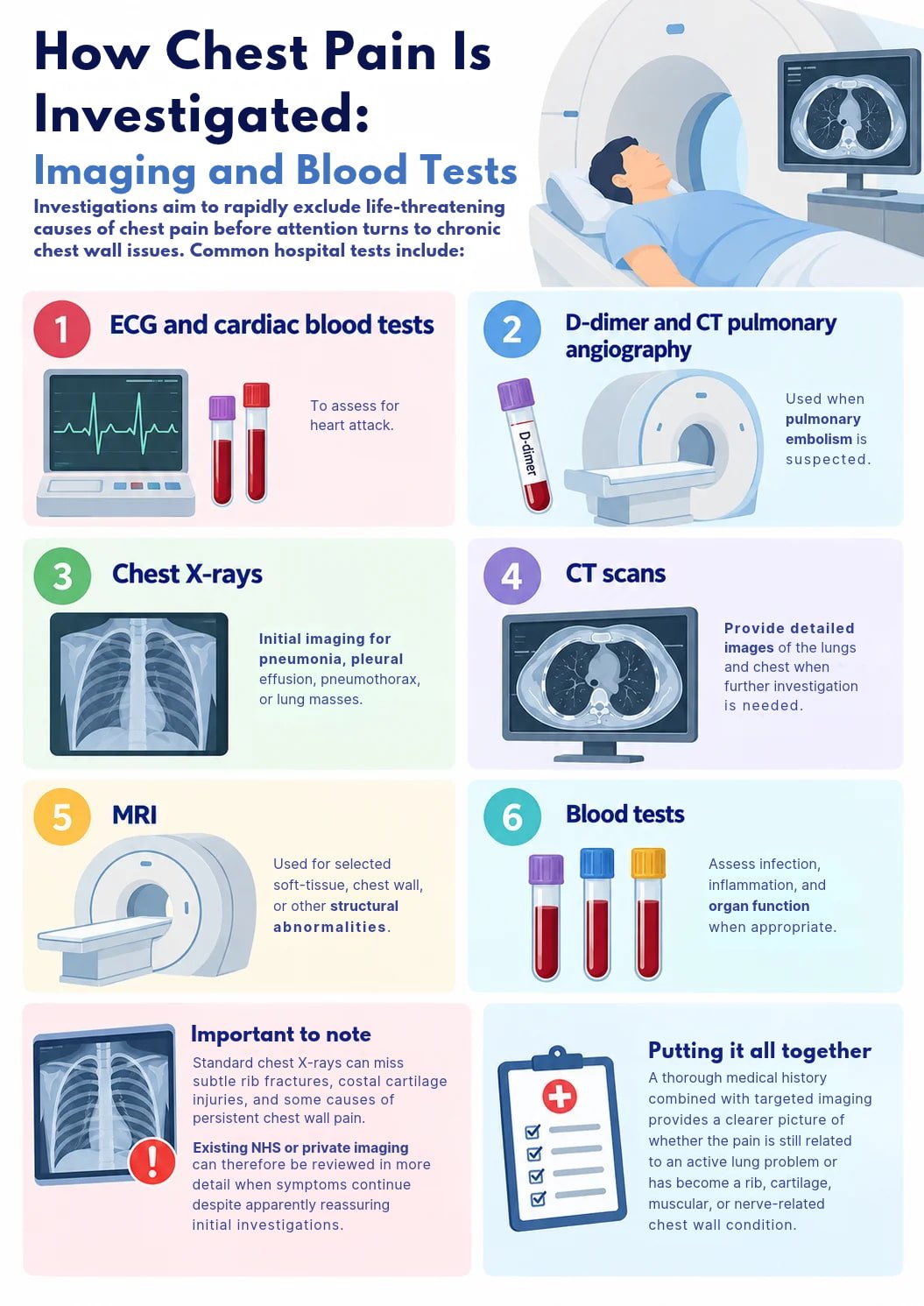
Investigations aim to rapidly exclude life-threatening causes of chest pain before attention turns to chronic chest wall issues. Common hospital tests include:
- ECG and cardiac blood tests to assess for heart attack
- D-dimer and CT pulmonary angiography when pulmonary embolism is suspected
- Chest X-rays as initial imaging for pneumonia, pleural effusion, pneumothorax, or lung masses
- CT scans providing detailed images of the lungs and chest when further investigation is needed
- MRI for selected soft-tissue, chest wall, or other structural abnormalities
- Blood tests assessing infection, inflammation, and organ function when appropriate
Standard chest X-rays can miss subtle rib fractures, costal cartilage injuries, and some causes of persistent chest wall pain. Existing NHS or private imaging can therefore be reviewed in more detail when symptoms continue despite apparently reassuring initial investigations.
A thorough medical history, combined with targeted imaging, provides a clearer picture of whether the pain remains related to an active lung problem or has become a rib, cartilage, muscular, or nerve-related chest wall condition.
Chest Wall-Focused Care at Rib Injury Specialist London
Mr Marco Scarci is a Consultant Thoracic Surgeon and Rib Injury Specialist with a particular focus on persistent rib and chest wall pain after trauma or lung disease. Patients may seek assessment after pneumonia or COVID-19, ongoing discomfort following a collapsed lung and chest drain, sports injuries, road traffic accidents, or chronic pain after previous thoracic surgery.
Conditions assessed include:
- Rib fractures and non-union
- Flail chest
- Slipping rib syndrome
- Costal cartilage injuries
- Sternal fractures
- Chronic chest wall pain and chest wall reconstruction
- Intercostal nerve-related pain
Existing CT, X-ray, or MRI imaging can be reviewed alongside the medical history and a focused assessment of chest wall mechanics and pain. Further targeted imaging may be recommended where the original investigations did not fully explain persistent symptoms.
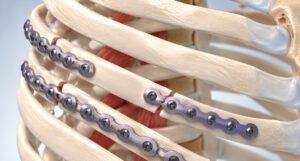
Treatment options are tailored to the individual diagnosis and may include conservative treatment, pain management, targeted nerve procedures, rib fixation, or chest wall reconstruction where appropriate. Remote and in-person consultations may be available for patients seeking specialist review after previous NHS, private, or overseas care.
Frequently Asked Questions
Can lung conditions cause pain that feels exactly like a pulled chest muscle?
Yes. Pneumonia, pleurisy, and pulmonary embolism can cause sharp pain that worsens with movement or breathing. Unlike a muscle strain, it may also involve cough, breathlessness, fever, or feeling unwell. Seek medical advice if these symptoms occur together.
How long should chest pain last after pneumonia or COVID-19 before I worry?
Mild pain when breathing deeply can last several weeks. Seek assessment sooner if it worsens or comes with fever or breathlessness, or if significant pain lasts beyond four to six weeks.
Could my chest wall pain be caused by high blood pressure?
High blood pressure does not usually cause chest pain directly, but it raises the long-term risk of heart disease. If you have high blood pressure and recurring chest pain, arrange a cardiovascular assessment.
Do I need a referral to see Rib Injury Specialist London for persistent chest wall pain?
Not always. Many patients can self-refer, especially if they have recent scans to share. However, private insurers may require a GP referral—our team can advise.
What if my scans are “normal” but I still have severe chest pain?
Normal X-rays do not rule out every cause. Conditions such as slipped rib syndrome, cartilage injuries, and subtle rib fractures can be missed. A specialist assessment and targeted imaging may identify a treatable cause.

Mr Marco Scarci
Consultant thoracic surgeon at Imperial College Healthcare NHS Trust, specialising in rib and chest wall conditions. Mr Scarci has performed over 5,000 minimally invasive thoracic procedures and treats slipping rib syndrome, rib fractures, and chest wall pain at five London hospitals.