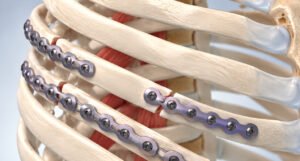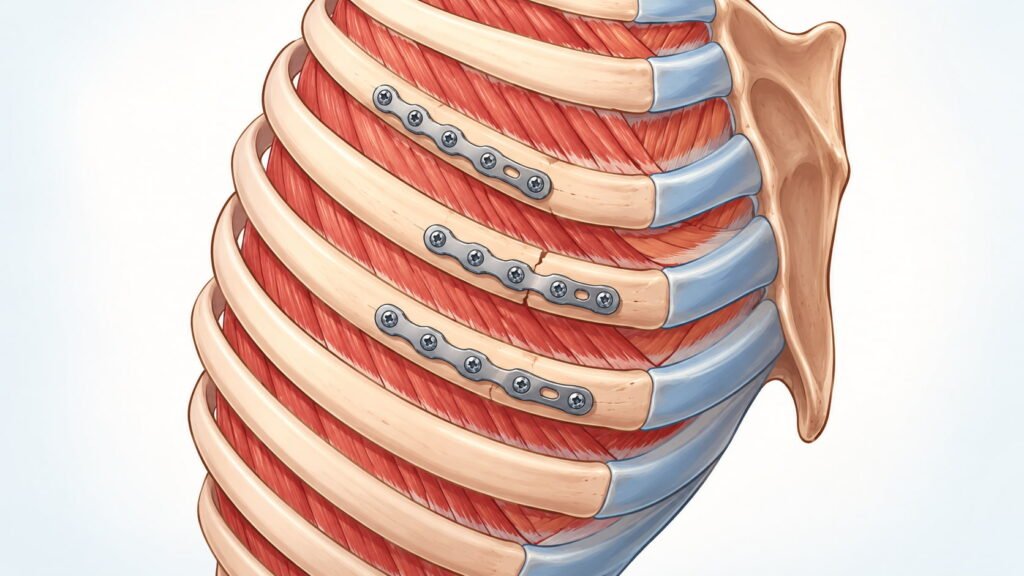
Private surgical stabilisation of rib fractures, known as SSRF, usually covers surgeon and anaesthetist fees, hospital stay, titanium implants and the first post-operative review. The final cost depends on the number of ribs treated, the complexity of the injury, the need for HDU or ICU care and the hospital chosen.
This guide is for people considering self-pay or insured private rib fixation, particularly in London. A personalised estimate should be based on your scans, treatment plan and expected hospital stay.
Why Patients Choose Mr Marco Scarci for Private SSRF
Private surgical stabilisation of rib fractures should include clear clinical advice, careful planning, and transparent cost information. Mr Marco Scarci provides specialist assessment and treatment for chest wall injuries at leading London private hospitals, such as The Wellington Hospital, The London Clinic, Bupa Cromwell and Imperial Private Healthcare.
Focused experience in chest wall conditions
His practice includes rib fracture fixation, chest wall trauma, slipping rib syndrome and costal cartilage injuries, alongside minimally invasive thoracic surgery.
Imaging reviewed in advance where available
Reviewing scans before the first appointment can make the consultation more focused, helping clarify the injury, discuss whether SSRF may be appropriate, and outline available treatment options.
Clear costs before booking
Consultation fees and likely treatment costs are explained through written quotations before a procedure is booked, so patients can make informed decisions with greater confidence.
What to Expect Before Private Rib Fixation Surgery
Before surgery, your scans and medical history will be reviewed to confirm that surgical stabilisation of the rib fractures is appropriate and to plan the procedure. Pre-operative assessment may include blood tests, heart and lung checks, and an anaesthetic review.
SSRF may be considered for unstable or multiple rib fractures, flail chest, displaced fractures causing persistent symptoms that have not improved with non-operative treatment, or chest wall deformity affecting breathing.
Your surgical team, usually headed by a thoracic or rib injury specialist, will also discuss pain management and recovery, including nerve blocks where appropriate. Good pain control and early mobilisation after surgery can help you breathe deeply, cough effectively and reduce the risk of complications such as pneumonia and respiratory problems.
What Drives the Cost of Private Rib Fixation (SSRF) in the UK?
There is no fixed price for SSRF. Costs depend on the extent of the injury, the number of ribs requiring fixation, the implants needed and the level of post-operative care.
Hospital and Facility Fees
Hospital costs are usually the largest part of the bill. They cover theatre time, nursing, ward or HDU/ICU care, blood tests, imaging, drains and other consumables.
In London, a private room may cost £450 to £750 or more per night. Regional private hospitals may charge around £275 to £450. Most patients stay for two to five days. ICU care, extra nights and complex injuries can substantially increase the total.
Surgeon and Anaesthetist Fees
Professional fees cover planning, surgery and in-hospital reviews. Straightforward fixation of two or three ribs generally falls at the lower end of the overall price range. Multi-rib fixation or surgery combined with thoracoscopy for injuries such as pneumothorax usually costs more.
Thoracic anaesthesia may include regional nerve blocks and specialist monitoring. Good pain control supports deep breathing, earlier mobilisation and discharge.
Implants and Specialist Equipment
SSRF uses contoured titanium plates and locking screws to stabilise fractured ribs. Costs rise with the number of ribs treated and the amount of hardware required.
For example, two displaced ribs may require two plates, while a flail chest can require several plates and more extensive fixation. Some implant systems have a higher upfront cost but may support accurate, durable fixation.
Pre-operative Investigations and Consultations
Consultations and imaging can cost around £400 to £1,000 or more, depending on what is required. CT scans with thin slices and 3D reconstruction are often needed to identify the ribs and fracture patterns requiring treatment. Detailed imaging is important due to the specific type of surgery involved for rib fractures.
Typical self-pay costs may include:
- Chest wall ultrasound: £250 to £450
- CT chest with 3D reconstruction: £500 to £900
- MRI: £500 to £1,000
- Diagnostic or therapeutic nerve block: £900 to £1,800
Ask whether these costs are included in the hospital package or charged separately.
Postoperative Care and Follow-Up
The first post-operative review is often included in the surgical package. Further appointments, physiotherapy, extra imaging or unplanned readmission may be charged separately.
Self-pay physiotherapy commonly costs £60 to £120 per session. Early mobilisation and breathing exercises can support recovery and reduce the risk of chest complications.
Self-Pay vs Private Medical Insurance
Self-pay and insured patients should receive the same standard of clinical care. The difference is how treatment is approved, quoted and paid for.
Self-Pay Patients
Self-pay packages often include an agreed hospital stay, theatre costs, implants, anaesthetic and surgeon fees, routine tests and the first post-operative review.
Request a written quotation confirming what is included and excluded. Common exclusions include:
- Initial consultation and imaging
- Extra nights in hospital
- Extended HDU or ICU care
- Unexpected imaging or procedures
- Physiotherapy and additional follow-up
Some hospitals offer finance arrangements through regulated credit providers. Check the interest rate, deposit and repayment terms carefully.
Insured Patients
Private medical insurance may cover SSRF when it is clinically necessary. Pre-authorisation is essential before admission.
Confirm the following with your insurer:
- Whether SSRF is covered
- Any policy excess
- Caps on surgeon, anaesthetist or hospital fees
- Whether implants and HDU or ICU care are included
- Whether there may be a shortfall
The treating team can provide procedure codes and clinical letters to support an authorisation request.
Typical Cost Scenarios for Private SSRF in the UK
These examples are illustrative only. Actual quotes depend on the hospital, injury pattern and treatment plan.
Scenario 1: Isolated Rib Fixation in an Otherwise Healthy Patient
A fit adult has two or three displaced rib fractures after a cycling accident. They need rib plating, a two- to three-night ward stay and no critical care.
Typical costs include consultation, CT with 3D reconstruction, hospital charges, surgeon and anaesthetist fees, implants, post-operative imaging and the first follow-up. This may cost approximately £15,000 to £19,000.
Scenario 2: Complex Multi-Rib Fixation with HDU/ICU Support
A patient has a flail chest after a road traffic accident, with several ribs broken in more than one place and associated lung injury. They require more implants, a longer operation, chest drains and HDU or ICU monitoring.
This type of case may cost £19,000 to £25,000 or more because of the additional hardware, theatre time and critical care.
Scenario 3: Delayed SSRF for Chronic Pain and Non-Union
Some people seek treatment weeks or months after an injury because of persistent pain, non-union or chest wall deformity. These cases may need more detailed imaging and longer surgery due to scar tissue.
Costs commonly range from £15,000 to £22,000, depending on the number of ribs treated and the required stay.
How the Private SSRF Pathway Works with Mr Marco Scarci
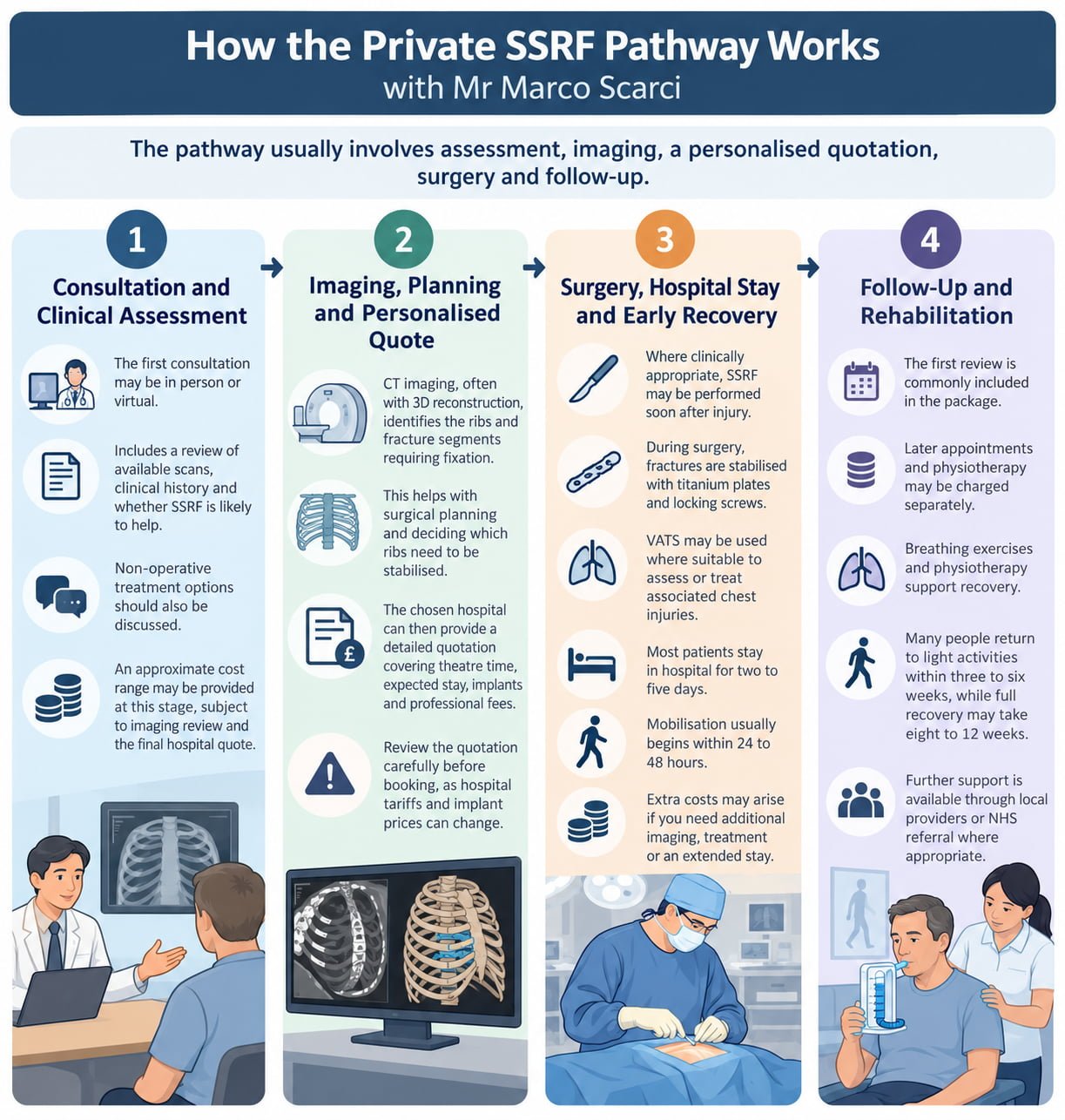
The pathway usually involves assessment, imaging, a personalised quotation, surgery and follow-up.
Step 1: Consultation and Clinical Assessment
The first consultation may be in person or virtual. It includes a review of available scans, clinical history and whether SSRF is likely to help. Non-operative treatment options should also be discussed.
An approximate cost range may be provided at this stage, subject to imaging review and the final hospital quote.
Step 2: Imaging, Planning and Personalised Quote
CT imaging, often with 3D reconstruction, identifies the ribs and fracture segments requiring fixation. The chosen hospital can then provide a detailed quotation covering theatre time, expected stay, implants and professional fees.
Review the quotation carefully before booking, as hospital tariffs and implant prices can change.
Step 3: Surgery, Hospital Stay and Early Recovery
Where clinically appropriate, SSRF may be performed soon after injury. During surgery, fractures are stabilised with titanium plates and locking screws. VATS may be used where suitable to assess or treat associated chest injuries.
Most patients stay in hospital for two to five days. Mobilisation usually begins within 24 to 48 hours. Extra costs may arise if you need additional imaging, treatment or an extended stay.
Step 4: Follow-Up and Rehabilitation
The first review is commonly included in the package. Later appointments and physiotherapy may be charged separately.
Breathing exercises and physiotherapy support recovery. Many people return to light activities within three to six weeks, while full recovery may take eight to 12 weeks. Further support is available through local providers or NHS referral where appropriate.
Patient Outcomes and Cost-Effectiveness of SSRF
SSRF has a substantial upfront cost, so it should be offered only when the expected clinical benefit justifies surgery.
Clinical Benefits That Reduce Overall Cost
For selected patients with severe rib injuries, SSRF may reduce ventilator time, ICU stay, pneumonia risk, and overall hospital stay compared with non-operative management. These benefits can reduce the cost of managing complications, particularly where ICU care is needed.
However, most rib fractures heal without surgery. SSRF is generally reserved for injuries such as flail chest, unstable fractures, significant displacement, respiratory compromise or persistent pain despite conservative care.
Balancing Upfront Surgical Cost Against Long-Term Impact
Private SSRF may reduce indirect costs such as extended time off work, repeated appointments and ongoing pain treatment. A non-operative management comparison can help place surgical treatment in context.
The decision should be based on clinical need, expected improvement, operative risk and personal circumstances, rather than cost alone.
What Patients Say About Private Rib Fixation Surgery
People often value clear pricing, support with insurance approval and a structured recovery plan. Real patient stories provide examples of recovery following thoracic procedures.
Some patients with the long-term effects of broken ribs report improved breathing, less severe pain and a quicker return to normal activity after successful fixation. Individual outcomes vary according to the injury and overall health.
Private SSRF is available at several London private hospitals, with patients attending from across the UK. Virtual pre-assessment may be available for people travelling from outside London, allowing imaging to be reviewed before admission.
Discuss Costs and Next Steps for Private Rib Fixation Surgery
If you have displaced rib fractures, flail chest or persistent pain that has not improved with conservative treatment, a consultation can clarify whether SSRF is appropriate and what it is likely to cost.
Mr Marco Scarci can provide personalised advice on your treatment options, supported by a clear written estimate before you decide whether to proceed. Contact his practice to arrange a consultation or request an estimate.
Frequently Asked Questions About the Cost of Private Rib Fixation (SSRF)
How much does private rib fixation surgery usually cost in the UK?
Private SSRF typically costs £15,000 to £25,000. Straightforward fixation of two or three ribs may cost around £15,000 to £19,000. Complex multi-rib injuries requiring critical care may cost £19,000 to £25,000 or more. A written estimate should follow clinical assessment and imaging review.
What is included in a typical self-pay quote for SSRF?
A typical package may include an agreed hospital stay, theatre fees, implants, surgeon and anaesthetist fees, routine post-operative tests and the first follow-up. It may exclude consultations, imaging, extra nights, extended ICU care, unexpected procedures and physiotherapy. Always request a written breakdown.
Will my private health insurance cover rib fixation surgery?
Insurance may cover SSRF when it is clinically indicated, but pre-authorisation is required. Contact your insurer early and confirm your excess, funding limits and whether there could be a shortfall. Always confirm with your insurer first before getting surgery to avoid any issues.
Can I get an estimate before I decide on surgery?
Yes. An initial range can be discussed after consultation. A detailed quote follows once the number of ribs, surgical approach, hospital and expected stay are known.
What if complications or extra nights in hospital increase the cost?
Your quote should set out potential extras, such as additional ICU care, imaging or nights in hospital. Ask what happens if the planned stay needs to be extended and how extra costs will be approved.
Is it cheaper to have SSRF abroad?
Treatment abroad may appear cheaper, but travel, aftercare and managing complications can add cost and difficulty. UK-based care offers continuity of follow-up and access to your clinical team after discharge.

Mr Marco Scarci
Consultant thoracic surgeon at Imperial College Healthcare NHS Trust, specialising in rib and chest wall conditions. Mr Scarci has performed over 5,000 minimally invasive thoracic procedures and treats slipping rib syndrome, rib fractures, and chest wall pain at five London hospitals.