Not every sharp pain in your chest after a bump or fall means a broken rib. But when the pain is severe, pinpoint and worse with every breath, it helps to know what to look for and when to act. This guide explains the hallmark symptoms, how bruised and broken ribs differ and the red flags that need immediate attention.
Key Takeaways
- Not all pain in your chest after an injury means a rib is broken. Bruised ribs, strained muscles and cartilage injuries can produce similar symptoms.
- A fractured rib typically causes sudden, sharp pain at one point that worsens with deep breaths, coughing, sneezing or twisting. If you can point to the sore spot with one finger, a fracture is more likely than a bruise.
- Call 999 or go straight to A&E if you have severe breathlessness, blue lips, confusion, coughing up blood, a very fast pulse or a serious accident behind the injury, such as a car accident or fall from height.
- Most broken ribs heal naturally without surgery, but early assessment reduces the risk of chest infections, pneumonia and long-term chest wall pain.
What Is a Rib Fracture (and How Is It Different from a Bruise)?
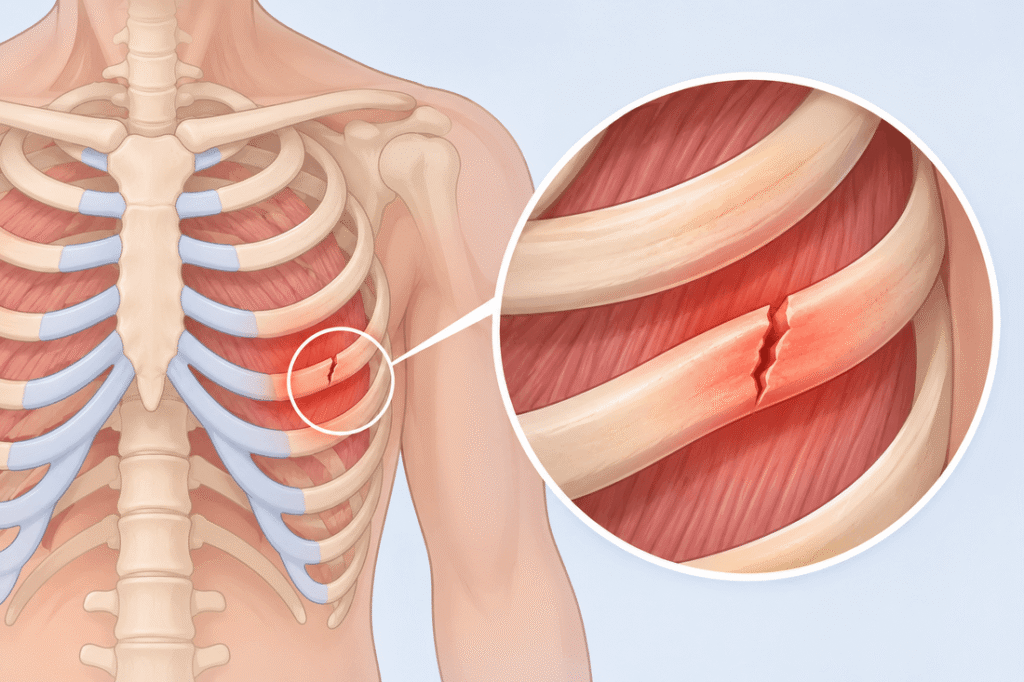
A rib fracture is a crack or complete break through a rib bone. A bruised rib is an injury to the bone covering, cartilage or surrounding soft tissue, while the bone itself stays intact. Rib fractures account for 15% of chest trauma admissions, making them among the most common chest injuries seen in emergency departments.
“Broken rib”, “fractured rib” and “rib fracture” all mean the same thing. A bruised rib is usually less severe, though the symptoms overlap.
Common causes include direct blows such as a football tackle, cycling crash or seatbelt impact in a car accident, along with sports injuries and prolonged severe coughing. Falls are the leading cause overall.
A standard chest X-ray misses up to half of non-displaced fractures, so doctors combine a physical exam with imaging such as a CT scan or ultrasound. The distinction matters because fractures carry higher risks, such as a collapsed lung, and recover more slowly.
Typical Symptoms of a Broken Rib
Common signs of a rib fracture in the first 24 to 48 hours include sudden, sharp chest pain, sometimes accompanied by a cracking sensation, and tenderness in a specific spot. Pain typically worsens with deep breathing, coughing, sneezing, laughing or twisting.
Other symptoms include clicking or grinding sensations, swelling, bruising and discomfort when lying flat, turning in bed or getting up. If multiple ribs are broken in several places, part of the chest wall may move inwards during inhalation, a potentially life-threatening condition called flail chest that requires emergency medical care.
Bruised vs Broken Ribs: Key Differences You May Notice
You cannot always tell at home whether you have a bruised or broken rib. Both cause pain, swelling and guarded breathing, but some patterns make a fracture more likely.
A fractured rib produces sharp, stabbing pain with one intensely tender point. A bruised rib tends to cause broader, aching soreness across several ribs or the surrounding muscles. A minor bump often allows shallow breathing without severe distress, whereas a bigger impact, such as a rugby tackle or serious accident, can make each breath feel unbearable.
Only a clinician can reliably tell the two apart and rule out injuries to internal organs.
| Feature | Bruised Rib | Broken Rib |
| Pain type | Broad, aching | Sharp, pinpoint |
| Tenderness | Diffuse over chest area | One-finger point tenderness |
| Breathing difficulty | Mild to moderate | Often severe with deep breaths |
| Crepitus or clicking | Rare | Possible |
| Typical healing time | 4–8 weeks | About six weeks (longer if complex) |
How to Check Your Ribs Safely at Home After an Injury
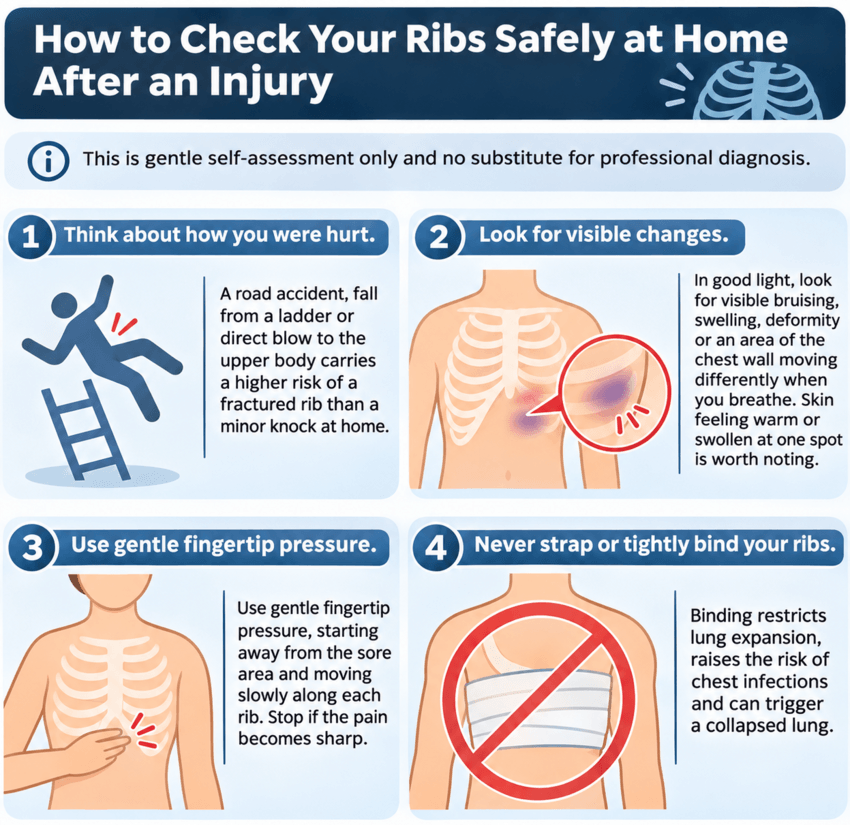
This is gentle self-assessment only and no substitute for professional diagnosis.
- Think about how you were hurt. A road accident, fall from a ladder or direct blow to the upper body carries a higher risk of a fractured rib than a minor knock at home.
- In good light, look for visible bruising, swelling, deformity or an area of the chest wall moving differently when you breathe. Skin feeling warm or swollen at one spot is worth noting.
- Use gentle fingertip pressure, starting away from the sore area and moving slowly along each rib. Stop if the pain becomes sharp.
- Never strap or tightly bind your ribs. Binding restricts lung expansion, raises the risk of chest infections and can trigger a collapsed lung.
Red Flag Symptoms: When Rib Pain Is an Emergency
Although most broken ribs are not life-threatening, severe or worsening breathlessness, blue lips or fingertips, confusion, or pain that prevents normal speech require immediate emergency care. Other warning signs include suspected internal bleeding, coughing up blood, a rapid heartbeat, pale or clammy skin, fainting or a high fever.
Seek emergency assessment after high-impact accidents, such as cycling or e-scooter crashes, even if pain seems manageable. Chest wall deformity or a section moving inwards during inhalation also requires urgent medical attention.
How Doctors Confirm If Your Ribs Are Fractured
Doctors combine your story, a physical exam and imaging, and also check for complications.
Medical history
What happened, when the pain started, whether you heard a crack and what makes the pain worse.
Physical exam
The doctor feels along the chest wall for point tenderness, crepitus and bruising, and listens to your lungs.
Imaging
X-rays are the first tool and also check for a collapsed lung, though sensitivity can be as low as 50% for non-displaced fractures, as per published studies. A CT scan detects 30 to 40% more fractures. Ultrasound has a pooled sensitivity of around 89% and specificity of 98%.
Complications of Broken Ribs You Should Not Ignore
Even one fractured rib can cause complications, particularly when pain is poorly controlled or internal structures are injured. Risks include a collapsed lung, internal bleeding, lung bruising and pneumonia caused by shallow breathing. Watch for sudden breathlessness, fever or yellow or green mucus, which require prompt medical attention.
Persistent chest wall pain and fractures that fail to heal may require surgical fixation. Older adults and people with multiple fractures or lung conditions such as COPD face greater risks. A recent meta-analysis found that displaced fractures carry roughly 3.3 times higher odds of pulmonary complications.
Managing Pain and Protecting Your Lungs at Home
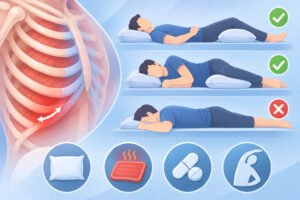
Most people with simple broken or bruised ribs recover at home with adequate pain relief and breathing exercises. Take paracetamol or ibuprofen if appropriate, use an ice pack to ease discomfort, and sleep slightly upright with a cushion supporting the injured side.
While awake, take 10 slow, deep breaths every hour, followed by a few supported coughs to help prevent chest infections. Seek urgent medical advice if you develop a fever or green mucus. Start gentle walking when comfortable, but avoid heavy lifting, contact sports and upper-body twisting until medically cleared.
When Specialist Rib and Chest Wall Care Is Needed
Most rib fractures resolve with conservative treatment, but some need specialist input. Consider referral if you have persistent pain beyond 6 to 8 weeks, suspected non-union, visible deformity or recurrent chest infections after an injury.
Rib plating surgery (ORIF/SSRF) can treat flail chest or multiple displaced fractures. Procedures for slipping rib syndrome and costal cartilage injuries are also available. Intercostal nerve cryoablation and targeted nerve blocks can address chronic pain that has not responded to standard treatment.
Mr Marco Scarci, a Rib Injury Specialist in London, offers in-person and remote consultations, works with major UK insurers and self-pay patients, and can support medicolegal claims.
Recovery: How Long Broken and Bruised Ribs Take to Heal

The healing process depends on injury severity and your general health, but most people recover well.
Bruised ribs often improve within 4 to 8 weeks. Most broken ribs take about six weeks to mend, while complex multi-rib injuries can take 10 to 12 weeks or longer. Healing is slowed by older age, osteoporosis, smoking, diabetes, vitamin D deficiency and heavy physical strain.
| Injury Type | Typical Healing Time | When to Seek Further Help |
| Bruised rib | 4–8 weeks | Pain worsening after 2 weeks |
| Simple broken rib | About six weeks | No improvement by week 4 |
| Multiple rib fractures | 10–12+ weeks | Persistent pain, breathing issues, or deformity |
| Flail chest | Varies (often surgical) | Immediate emergency care |
Returning to full-contact or high-impact activity before 6 to 8 weeks can lead to re-injury. Your ribs protect the lungs and other organs, so patience matters.
How Mr Marco Scarci, a Rib Injury Specialist, Can Help
Consultant Thoracic Surgeon Mr Marco Scarci specialises in rib fractures and chest wall pain. His services include rapid assessments, advanced imaging, second opinions, rib plating surgery, slipped rib syndrome correction and treatments for chronic nerve pain.
He offers consultations across multiple London locations, remote appointments, private insurance and self-pay options, as well as medicolegal reporting. If you experience persistent chest wall pain or repeated chest infections, seek specialist advice for a tailored treatment plan.
Frequently Asked Questions
Can a broken rib heal on its own without seeing a doctor?
Many simple fractures heal naturally over about six weeks. A medical review is still advised to rule out a collapsed lung, optimise pain relief and teach breathing exercises.
Do you always need an X-ray if you suspect a rib fracture?
No. Doctors decide based on symptoms, examination and how the injury happened. A CT scan or ultrasound may suit suspected small fractures, since X-rays miss many non-displaced ones.
Is it normal for rib pain to be worse at night?
Yes. Use extra pillows, support the injured side and take regular pain relief. Seek review if night pain is severe or worsening.
Can you get a chest infection from a broken rib?
Yes. Pain makes people avoid deep breaths and coughing, and around 12% develop pneumonia. Breathing exercises, good pain control and prompt help for fever or coloured mucus are essential.
When can I return to sport after a rib fracture?
Walking can usually restart within days. Contact sports and heavy lifting typically wait until at least 6 to 8 weeks and only when movements are pain-free. A clinician should clear your return.

Mr Marco Scarci
Consultant thoracic surgeon at Imperial College Healthcare NHS Trust, specialising in rib and chest wall conditions. Mr Scarci has performed over 5,000 minimally invasive thoracic procedures and treats slipping rib syndrome, rib fractures, and chest wall pain at five London hospitals.