Chest pain in a teenager or young adult can be alarming, particularly when it appears suddenly or interferes with breathing, exercise or everyday activity. While most chest pain in young people is not caused by the heart, there are serious conditions that need to be ruled out quickly.
This guide covers the full range of thoracic causes of chest pain in teens and young adults, from rib injuries, costochondritis and slipping rib syndrome to lung, gastrointestinal and cardiac conditions. It also explains when to call 999, when to see your GP, and when persistent rib or chest wall pain may need specialist assessment.
Key Takeaways
- Most chest pain in teens and young adults is non-cardiac. Musculoskeletal conditions, gastrointestinal issues and anxiety account for the overwhelming majority of cases.
- Serious causes are rare but need urgent exclusion. Call 999 or go to A&E for severe chest pain, breathlessness, collapse, or pain spreading to the arm or jaw.
- Non-cardiac causes are usually treatable. Gastro-oesophageal reflux disease, anxiety, lung conditions and musculoskeletal injuries can all make the chest feel tight or painful.
- Normal tests do not rule out every cause of pain. Subtle rib, cartilage, or nerve problems may need more targeted assessment.
- Persistent chest pain may come from the ribs or chest wall, particularly if movement, breathing, pressure, or sport trigger it.
When Chest Pain in a Young Person Is an Emergency
Heart attack and aortic dissection are rare in people under 40, but missing a serious cardiovascular or respiratory condition can be dangerous. If you or someone near you develops sudden severe chest pain with significant breathlessness, collapse or other concerning symptoms, call 999 without delay.
Heart attack symptoms can include central pressure, squeezing, or tightness in the chest that persists; pain spreading to the left or right arm, neck, back, or jaw; cold sweating; nausea; feeling light-headed or faint; and shortness of breath with or without chest discomfort.
Aortic dissection can cause sudden severe chest or back pain, sometimes described as tearing or ripping. Collapse, loss of consciousness or differences in pulses or blood pressure between the arms can also occur.
In A&E, doctors may perform an ECG, draw blood for troponin, order a chest X-ray and arrange CT imaging when conditions such as pulmonary embolism or aortic dissection are suspected.
Many teens and young adults with intense chest pain ultimately have non-cardiac causes. Once urgent heart and lung conditions have been excluded, persistent localised pain may be related to chest wall pain involving the ribs, cartilage, muscles or nerves.
Why Chest Pain Is Different in Teens and Young Adults
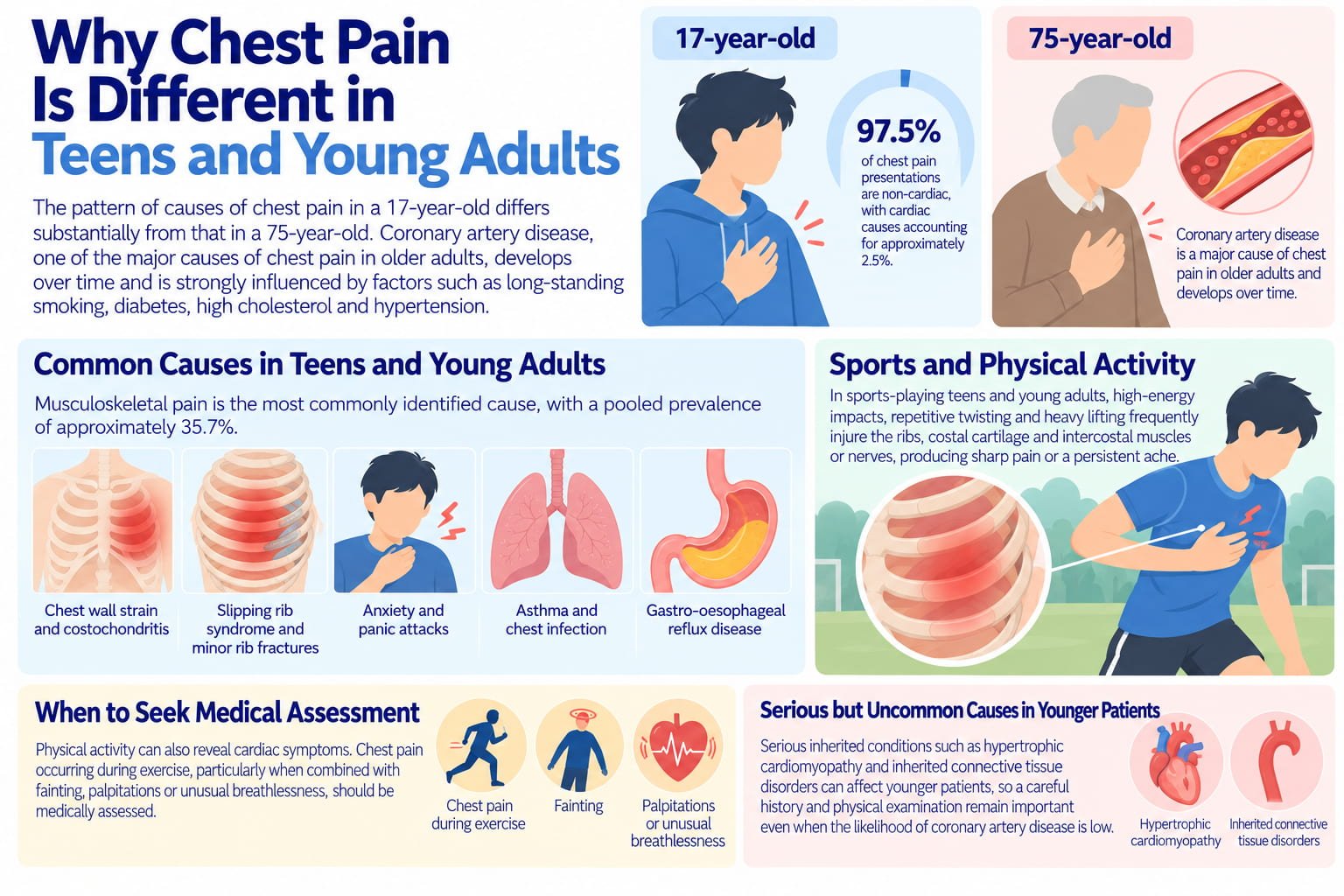
The pattern of causes of chest pain in a 17-year-old differs substantially from that in a 75-year-old. Coronary artery disease, one of the major causes of chest pain in older adults, develops over time and is strongly influenced by factors such as long-standing smoking, diabetes, high cholesterol and hypertension.
A systematic review and meta-analysis of paediatric chest pain presentations in emergency departments found that 97.5% were non-cardiac, while cardiac causes accounted for approximately 2.5%. Musculoskeletal pain was the most commonly identified cause, with a pooled prevalence of approximately 35.7%. Common causes in this age group include:
- Chest wall strain and costochondritis
- Slipping rib syndrome and minor rib fractures
- Anxiety and panic attacks
- Asthma and chest infection
- Gastro-oesophageal reflux disease
In sports-playing teens and young adults, high-energy impacts, repetitive twisting and heavy lifting frequently injure the ribs, costal cartilage and intercostal muscles or nerves, producing sharp pain or a persistent ache.
Physical activity can also reveal cardiac symptoms. Chest pain occurring during exercise, particularly when combined with fainting, palpitations or unusual breathlessness, should be medically assessed.
Serious inherited conditions such as hypertrophic cardiomyopathy and inherited connective tissue disorders can affect younger patients, so a careful history and physical examination remain important even when the likelihood of coronary artery disease is low.
Thoracic Anatomy Basics: What in the Chest Can Hurt?
“Thoracic causes” refers to problems arising from the chest wall, ribs, lungs, pleura, heart, great vessels, oesophagus and nerves. Understanding which structures sit inside the chest helps explain why the same symptom can have many different origins.
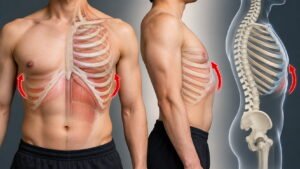
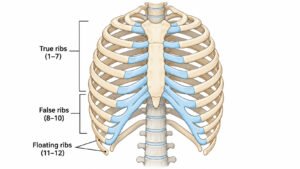
The chest wall includes 12 pairs of ribs, costal cartilage connecting the ribs towards the sternum, intercostal muscles between each rib and intercostal nerves running along the lower border of the ribs. All can become sources of pain after trauma, repetitive activity or strain.
The lungs and pleura can generate sudden pleuritic pain, which typically becomes sharper with breathing or coughing. Pneumothorax, pneumonia and pulmonary embolism are examples.
The heart and pericardium can cause chest pain in conditions such as pericarditis and myocarditis. These may occur with breathlessness, palpitations, fever or other symptoms.
The oesophagus runs directly behind the heart. Gastro-oesophageal reflux disease or oesophageal spasm can produce central chest pain with a burning or squeezing sensation that can closely resemble heart-related pain.
Common Thoracic Causes of Chest Pain in Teens and Young Adults
Most chest pain in this age group has non-cardiac causes. Musculoskeletal conditions and gastrointestinal issues are common, and recognising their typical patterns can help guide diagnosis.
- Chest wall strain: dull or sharp pain after lifting, sport or repetitive movement. Pain may worsen with particular body positions and improve gradually with rest.
- Rib contusion or minor fracture: localised tenderness after a direct blow, fall or sporting injury. Pain is often sharp with deep breathing or coughing and may not always be visible on an initial X-ray.
- Costochondritis: sharp, well-localised pain around the junction between the ribs and sternum. It is often reproducible by pressing over the affected area and can worsen with exertion or deep breathing.
- Slipping rib syndrome: intermittent stabbing pain around the lower ribs, sometimes accompanied by clicking, popping or a sensation that a rib is moving.
- Gastro-oesophageal reflux disease: heartburn or burning behind the breastbone that may worsen after meals or when lying flat.
- Asthma or chest infection: wheezing, coughing, fever or chest tightness that may accompany respiratory symptoms.
- Anxiety: episodes of chest tightness, a racing heart, tingling or breathlessness that may occur during periods of stress.
A quick comparison of four commonly confused categories:
| Feature | Chest Wall Pain | GORD/GERD | Anxiety | Heart-Related Chest Pain |
| Onset | After injury or strain | Often after meals | Often during stress | May occur with exertion |
| Character | Sharp, localised | Burning sensation | Tight, diffuse | Pressure, squeezing |
| Triggers | Movement, pressing area | Lying flat, certain foods | Stress or panic | Physical effort |
| Other symptoms | Tenderness on palpation | Sour taste, heartburn | Tingling, dizziness | Sweating, nausea, arm or jaw pain |
Even when a heart problem is unlikely, persistent or severe chest pain warrants GP or specialist assessment rather than self-diagnosis.
Chest Wall and Rib Causes: The Leading Source of Pain
Chest wall pain is one of the most common causes of chest pain in teenagers and young adults. A prospective study of adolescents with chest pain found that 31% had a musculoskeletal cause, including costochondritis in 14% and chest wall syndrome in 13%.
Rib contusions and fractures are frequent after sport, falls or road traffic collisions. Pain is typically localised and becomes worse with deep breathing, coughing or twisting. Chest pain from rib or muscle problems is often sharp and may be reproduced by pressing over the affected area.
Young athletes can develop acute fractures, rib stress injuries, costal cartilage damage and intercostal muscle strains. Rib injuries in athletes can occur from direct impact as well as repetitive loading in sports such as rowing, rugby, golf and throwing sports.
Costochondritis is inflammation or irritation around the junction where the ribs and costal cartilage meet the sternum. It causes localised chest pain that can worsen with deep breaths, movement, coughing and exertion.
Intercostal muscle strain from weightlifting, rowing or intense coughing can make the chest feel tight and painful. Muscle strain and other uncomplicated chest wall injuries frequently improve with activity modification and appropriate rehabilitation.
Standard chest X-rays may miss subtle rib fractures and do not clearly show many cartilage injuries. Ongoing focal pain may therefore require CT, MRI, ultrasound or a targeted chest wall examination depending on the suspected condition.
Slipping Rib Syndrome and Complex Chest Wall Pain
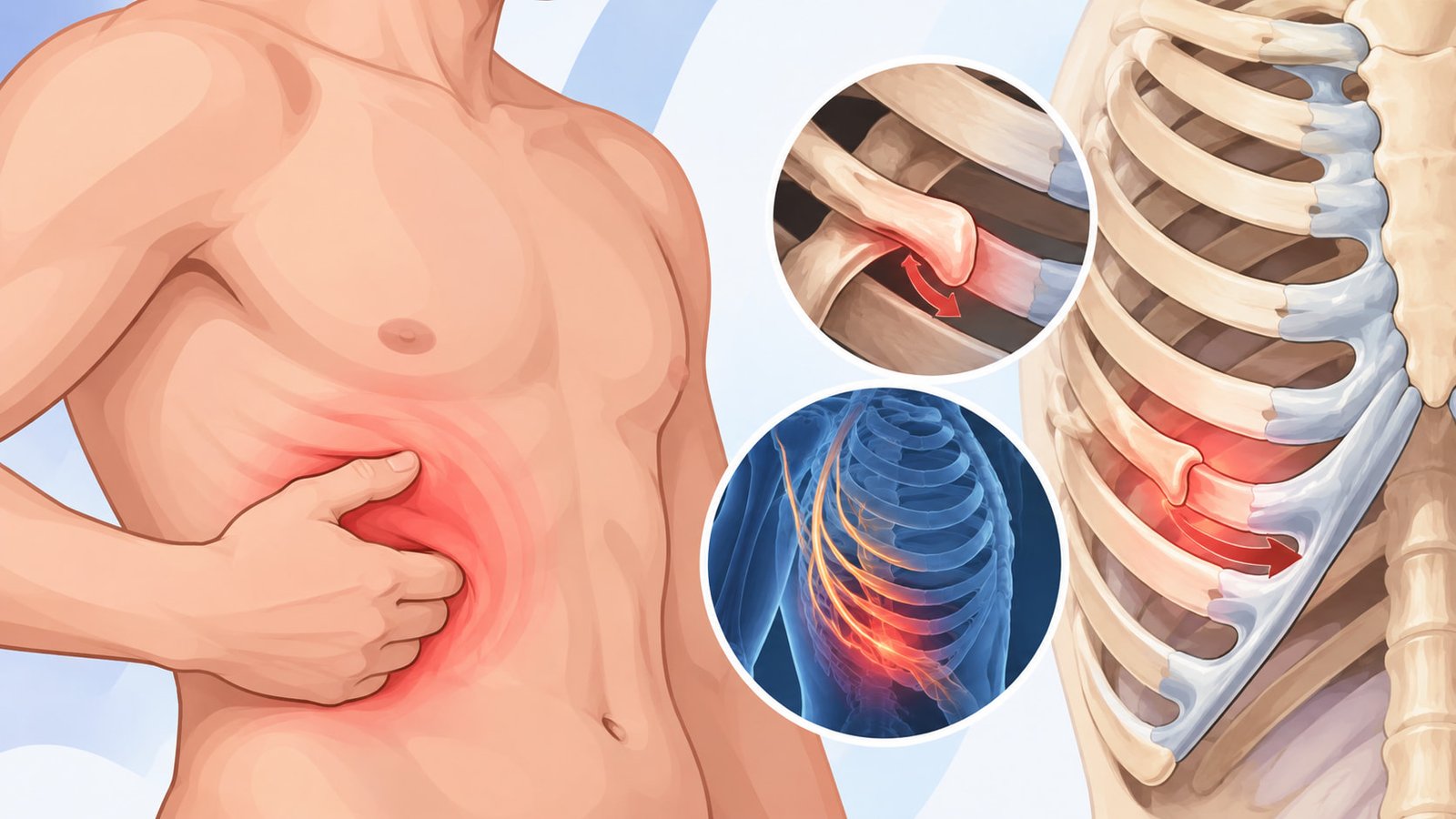
Slipping rib syndrome is a frequently overlooked cause of sharp, intermittent lower chest or upper abdominal pain in young and active individuals. It is often misdiagnosed as a gastrointestinal problem, muscle strain, costochondritis or anxiety.
The mechanism involves excessive movement of the lower costal cartilage, usually around ribs 8 to 10. The moving cartilage can irritate the intercostal nerve, causing sudden stabbing pain and sometimes a clicking or popping sensation.
Pain may be triggered by twisting, bending, deep breathing, coughing or certain sleeping positions. Routine X-rays, CT scans and MRI can appear normal because slipping rib syndrome is a dynamic mechanical problem.
Diagnosis is primarily clinical. Examination can include careful palpation and the hooking manoeuvre, in which the examiner applies controlled traction beneath the lower costal margin in an attempt to reproduce the patient’s characteristic pain and movement.
Dynamic ultrasound can also be useful in selected patients because it allows the rib margin to be assessed while the patient performs movements that trigger symptoms.
Treatment ranges from activity modification and targeted physiotherapy to intercostal nerve blocks and surgical treatment in patients with persistent disabling symptoms.
Thoracic Spine, Nerves and Chronic Chest Wall Pain
Not all chest pain comes directly from the ribs. The thoracic spine and intercostal nerves can refer pain around the chest wall and towards the front of the ribcage.
Intercostal neuralgia often presents as burning, shooting or band-like pain that follows the course of a rib. It may develop after shingles, trauma, surgery or persistent mechanical irritation.
The discomfort may be worsened by touch or light pressure on the skin overlying the affected nerve. Some patients also experience altered sensation, tingling or numbness.
Thoracic spine problems, including postural strain, scoliosis and disc-related conditions, can contribute to persistent chest or upper-back discomfort in young adults. Long hours spent over laptops, studying or gaming may aggravate muscular and postural symptoms.
For carefully selected patients with severe, treatment-resistant nerve pain, specialist chest wall services may consider intercostal nerve blocks or intercostal nerve cryoablation. A recent systematic review and meta-analysis of intercostal nerve cryoablation in thoracic and cardiac surgery found outpatient opioid-consumption reductions ranging from approximately 10% to 76% across individual studies, although the overall evidence remained heterogeneous.
Heart-Related Causes in Young Adults: Rare but Serious
While heart attack is an uncommon cause of chest pain in people under 40, certain heart problems still require consideration, particularly when chest pain occurs with collapse, palpitations, exertion or a strong family history.
Heart-related pain may feel like pressure, squeezing or tightness. Cardiac causes of chest pain in younger patients can include myocarditis, pericarditis and inherited structural heart conditions.
Myocarditis is inflammation of the heart muscle. It can occur after viral infections as well as from immune-mediated, drug-related and other causes. Symptoms may include chest pain, breathlessness, palpitations, fatigue and occasionally fever.
Diagnosis may involve an ECG, cardiac troponin, echocardiography and cardiac MRI. Treatment depends on the cause and severity, with more intensive cardiac support required in severe cases.
Pericarditis is inflammation of the sac surrounding the heart. It commonly causes sharp, pleuritic chest pain that becomes worse when lying flat and may improve when sitting or leaning forward.
Hypertrophic cardiomyopathy (HCM) is an inherited heart condition involving abnormal thickening of the heart muscle. Contemporary guidelines estimate the prevalence of unexplained asymptomatic hypertrophy in young adults at approximately 1 in 500.
Symptoms can include exertional chest pain, breathlessness, palpitations or fainting. A family history of HCM or sudden cardiac death is particularly important when assessing a younger person with exertional symptoms.
Coronary events, including spontaneous coronary artery dissection, can also occur in young adults but remain uncommon. Shortness of breath, dizziness, and pain radiating towards the jaw or arm are warning symptoms at any age.
Lung and Pleural Causes: Pneumothorax and More
The lungs and pleura can generate sudden, sharp chest pain, particularly when conditions cause irritation of the pleural lining.
Primary spontaneous pneumothorax is a recognised thoracic condition that commonly affects young adults and occurs more often in tall, slim men. Published epidemiological data report an annual incidence of approximately 7.4 to 18 cases per 100,000 men and 1.2 to 6 per 100,000 women.
Typical presentation includes sudden one-sided pleuritic chest pain with shortness of breath. Diagnosis is made using chest imaging, and treatment depends on the patient’s symptoms, clinical stability and size of the pneumothorax.
A pulmonary embolism (PE) is a blood clot within the pulmonary arteries. Common symptoms include chest pain and shortness of breath, although presentation varies.
Risk factors in younger adults can include recent surgery, prolonged immobility or long-haul travel, oestrogen-containing contraceptives, pregnancy and inherited clotting disorders. Assessment may involve clinical risk scoring, D-dimer blood testing and CT pulmonary angiography where appropriate.
Chest infections and pneumonia are more common respiratory causes and usually occur with cough, fever, fatigue or breathlessness, although pleuritic chest pain may be prominent.
Gastro-Oesophageal Reflux Disease and Oesophageal Causes
The oesophagus runs through the chest directly behind the heart. Gastro-oesophageal reflux disease (GORD), also commonly referred to internationally as GERD, is one of the recognised causes of non-cardiac chest pain.
GORD causes chest discomfort when stomach contents reflux into and irritate the oesophagus. Typical symptoms include a burning sensation behind the breastbone, sour taste, heartburn and symptoms that worsen after meals or when lying flat.
Chest pain from reflux can occasionally feel like pressure or squeezing, making it difficult to distinguish from cardiac causes without appropriate assessment.
Oesophageal spasm can also produce intense squeezing chest discomfort that closely resembles heart-related pain. New or severe unexplained symptoms should therefore be medically assessed.
Dietary and lifestyle triggers can include spicy or fatty foods, energy drinks, coffee, alcohol, smoking and irregular meal patterns. Treatment may involve lifestyle changes and acid-suppressing medication such as proton pump inhibitors.
Anxiety, Stress and Functional Chest Pain
Anxiety, panic attacks and chronic stress are frequent reasons young adults experience chest tightness, a racing heart or the sensation of being unable to take a full breath.
These episodes may occur during exams, work pressure, relationship stress or other emotionally difficult situations. Anxiety can cause chest pain that feels similar to heart-related symptoms, and the discomfort itself is genuine.
Chest pain associated with anxiety may occur alongside a racing heart, dizziness, tingling in the hands or around the mouth, trembling and fear that something serious is happening.
Hyperventilation changes carbon dioxide levels in the blood and can lead to light-headedness, tingling and chest tightness. The body’s stress response also increases muscle tension and heart rate, producing genuine physical symptoms.
Before attributing symptoms to anxiety, doctors should consider whether heart, lung or other serious thoracic problems require investigation. Once dangerous causes have been excluded, management can include breathing retraining, cognitive behavioural therapy, regular exercise and treatment for an underlying anxiety disorder where appropriate.
How Doctors Investigate Chest Pain in Young Adults
A typical pathway begins with initial assessment in A&E or at a GP surgery, followed by targeted investigations depending on the symptoms, risk factors and examination findings.
Common investigations include:
- ECG: assesses heart rhythm and looks for abnormalities suggesting cardiac disease
- Blood tests: may include troponin for heart muscle injury, inflammatory markers for infection and D-dimer when pulmonary embolism is suspected
- Chest X-ray: useful for conditions including pneumothorax and pneumonia
- Echocardiogram or CT: considered when structural cardiac, pulmonary or aortic causes are suspected
- Ambulatory ECG monitoring: may be used to identify intermittent heart-rhythm
When serious heart, lung, and vascular causes have been excluded, but pain continues, further testing with CT, MRI, or high-resolution/dynamic ultrasound may be organised to examine ribs, costal cartilage, and other chest wall structures more closely.
Many young adults are safely discharged from A&E after observation and reassuring investigations, but they should receive clear advice about when to return if symptoms change or worsen.
When to See a Chest Wall and Rib Specialist
If chest pain has persisted for weeks or months, standard cardiac and lung tests are reassuring, and the pain appears to come from the ribcage itself, a chest wall specialist may be the appropriate next step.
Situations that can warrant specialist assessment include ongoing rib pain after sport or a road traffic accident, suspected slipping rib syndrome, persistent costochondral pain, focal chest wall pain without a cardiac explanation, or symptoms that continue despite normal routine scans.
Patients who are uncertain which rib or chest wall condition best matches their symptoms can take the rib pain quiz. It is intended as a starting point rather than a diagnosis and specifically advises people with emergency symptoms to call 999.
A Rib Injury Specialist focuses on diagnosing and treating persistent rib and chest wall conditions after urgent cardiac and respiratory causes have been excluded.
Mr Marco Scarci, Consultant Thoracic Surgeon, assesses chest wall mechanics, reviews existing imaging and arranges additional investigations when these are likely to clarify the diagnosis or influence treatment.
Treatment options may include targeted physiotherapy, intercostal nerve interventions, surgical stabilisation of selected rib fractures and surgical treatment of slipping rib syndrome. Specialist treatment for more significant or persistent rib fractures can include nerve blocks and titanium rib plating in selected cases.
Living With and Recovering From Thoracic Chest Pain
Most thoracic causes of chest pain in young adults either resolve fully or improve once the correct diagnosis is established and treatment is matched to the underlying problem.
Realistic recovery time varies according to the condition. Minor muscle strains may improve within days to several weeks, while uncomplicated rib fractures commonly take several weeks to heal. Costochondritis can last for weeks or months.
Complex cartilage or nerve pain may persist for longer and sometimes requires specialist treatment. Recovery should therefore be based on the diagnosis rather than one universal timetable.
Self-care can include pain relief as advised by a doctor, avoiding activities that clearly aggravate symptoms, gradual rehabilitation, posture and strengthening exercises, and smoking cessation where relevant.
Sleep disruption and frustration are common when chest wall pain persists. Ongoing pain can also affect mood, concentration and academic or work performance, making an accurate diagnosis particularly valuable.
Specialist chest wall care aims to provide a clear diagnosis, realistic treatment plan and a safe route back towards normal activity.
Frequently Asked Questions
Can a teenager or 20-year-old have a heart attack?
Heart attacks are very rare in healthy teenagers and young adults, but can occur with major risk factors such as early family heart disease, smoking, diabetes, cocaine use, or certain genetic conditions. Crushing chest pain, sweating, nausea, or pain spreading to the arm or jaw should always be assessed urgently.
Why does my chest still hurt weeks after a “normal” A&E visit?
A&E tests are designed to rule out life-threatening causes of chest pain. Chest wall injuries, rib cartilage problems, or nerve pain may not appear on initial tests, so see your GP if pain persists for several weeks or affects daily life.
Is it safe to exercise if I sometimes get chest pain?
Stop exercising and seek urgent assessment for new, severe, or unexplained chest pain, especially with breathlessness, dizziness, or faintness. Once serious causes have been ruled out, a gradual return to activity may be appropriate with medical advice.
Can anxiety alone really make my chest feel this tight?
Yes. Anxiety can cause real chest tightness, palpitations, tingling, and breathlessness. However, a clinician should rule out heart, lung, and other serious causes before attributing chest pain to anxiety.
Do I always need a scan for chest pain?
No. Many cases can be assessed through your symptoms, examination, ECG, and blood tests. Further imaging may be considered after trauma, for persistent or localised pain, or when symptoms affect breathing or daily activities.

Mr Marco Scarci
Consultant thoracic surgeon at Imperial College Healthcare NHS Trust, specialising in rib and chest wall conditions. Mr Scarci has performed over 5,000 minimally invasive thoracic procedures and treats slipping rib syndrome, rib fractures, and chest wall pain at five London hospitals.